• Icon
  • Icon
  • Icon
  • Icon
  • Icon
    4X31B
16323-HiVisYellow

G-Tek® PolyKor®

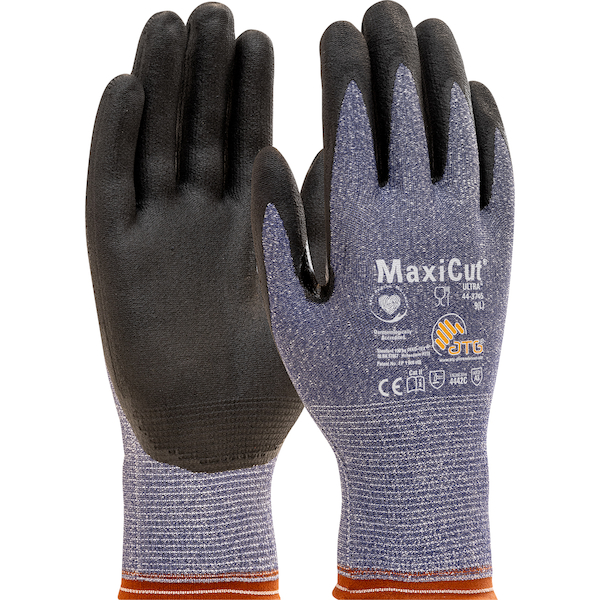
Economy Hi-Vis Seamless Knit A2 PolyKor® Blended Glove with Foam Nitrile Coated Grip on Palm & Fingers

16-323

  • Sizes: XS-XXXL
  • Ruler Icon Size Guide
Description

Ideal for handling and assembly of medium to large parts and materials, metal fabrication, parts cleaning, mechanical equipment maintenance and repair, and medium to heavy fastening and anchoring.

  • Seamless construction offers increased comfort and breathability
  • PolyKor® blended shell is lightweight and provides excellent dexterity, tactile sensitivity, and cut resistance
  • Foam Nitrile coatings are breathable and durable, designed with a cell structure that disperse fluids on contact for an improved grip
  • Reinforced thumb crotch for extended glove life, enhanced comfort, increased abrasion resistance and added durability in a high-wear area
  • Hi-vis coloring makes this product very easy to see
  • Silicone free
  • Complies with FDA food handling requirements 21 CFR 177.2600
  • Knit Wrist helps prevent dirt and debris from entering the glove
  • Color coded hems for easy size identification
  • Washable, resistant to chemicals, water, and ultraviolet light
  • Pair bagged retail ready
Applications
  • Secure Dry Grip and Oil Resistant
  • Handling and Assembly of Medium to Large Parts and Materials
  • Metal Fabrication
  • Mechanical Equipment Maintenance and Repair
  • Heavy to Medium Fastening and Anchoring
Performance Data
  • Cut Level: A2
  • Test Method: ASTM F2992-15

New edition ANSI/ISEA 105-2024 outlines a new test method for determining cut scores and a revised scale from A1-A9. Click here for more information about the new testing standard.

  • Abrasion Level: 6
  • Test Method: ASTM D3389-10

The ANSI/ISEA 105-2024 standard outlines test methods for abrasion and is scored from 0-6. The ASTM D3389-10 is used for uncoated gloves and the end point (failure) is the number of abrasion cycles when the first thread or yarn is broken. The larger numbers of cycles indicates greater abrasion resistance of the product and a higher Abrasion Level.

  • Puncture Level: 2
  • Test Method: ASTM F1342

The ANSI/ISEA 105-2024 blunt force puncture testing uses a probe to simulate a tear or burst hazard. The test measures the amount of force needed for a blunt probe to pierce through PPE material. Results are given in Newtons, which is converted into a 1-5 scale and spans from 10 newtons (Level 1) to 150+ newtons (Level 5) of puncture resistance.

  • ANSI Contact Heat Level: 1
  • Test Method: ASTM F1060-18 Temperature: 176°F

The ANSI/ISEA 105-2016 standard outlines test methods for contact heat and scored from 0-5. The ASTM F1060-18 test is used to test conductive heat resistance against gloves and PPE. Measuring the highest contact temperature for which the time to second-degree burn is at least 15 seconds and the alarm time is at least four seconds. Learn More

  • EN 388 2016 Results: 4X31B
  • Abrasion: 4Cut (Coupe Test): XTear: 3Puncture: 1Cut (TDM-100 Test): BImpact Protection:

EN 388 is a European Standard. Cut Level is determined by the number of cycles it takes a spinning circular blade, that is pulled across the material under a constant weight of 500 grams, to cut the fabric. As the number of cycles increase, so does the glove's ratings. Click here for more information about the EN 388 2016 standard.

Documents & Downloads
Compare ()
Clear All Compare
Okay, Got it.
X

ORDER SAMPLE

X

GET FIELD TRIAL