Noise You Can’t Hear Is Still Damaging

BLOG ARTICLES

The quietest noises in your facility may be the ones doing the most damage.

Safety managers know how to respond when a grinder screams or a press slams. But what about the ultrasonic welder that barely whispers? The compressed air leak no one notices anymore? The high‑frequency whine from automated equipment that workers can’t even hear?

These “quiet” sounds are often dismissed as harmless, but they can cause irreversible hearing damage long before anyone recognizes the risk.

It’s time to challenge a deeply ingrained belief in industrial safety: If it doesn’t sound loud, it doesn’t mean it’s safe.

The myth of “loudness” as a safety cue

Our ears evolved to warn us about low‑frequency, high‑amplitude threats—thunder, roaring animals, heavy impacts. Industrial noise today is nothing like that. Modern equipment produces high‑frequency and ultrasonic energy that the human ear cannot reliably detect, even when it’s strong enough to damage the inner ear.

OSHA considers 85 dBA over an 8‑hour time‑weighted average as a threshold for hearing conservation programs. However, many high‑frequency exposures are underestimated or missed entirely.

That means workers are often exposed to harmful noise without pain, discomfort, or any instinctive warning. Relying on subjective cues like “it sounds fine” or “no one complained” is a recipe for long‑term hearing loss.

The hidden noise sources doing real harm

Below are four common industrial culprits that rarely trigger concern, yet routinely exceed safe exposure limits.

  • Ultrasonic welders: Operate above human hearing but generate subharmonics and airborne energy exceeding 100 dB. Workers may feel nothing, but their cochlea absorbs the damage.
  • Compressed air leaks: A pinhole leak can produce 90–110 dB of high‑frequency noise, comparable to heavy equipment. The sharp pitch masks the danger.
  • High‑frequency tools: Sanders, pneumatic drivers, and computer numerical control (CNC) equipment emit noise in ranges where human sensitivity drops off.
  • Automated equipment: Robotics, servo motors, and high‑speed actuators generate tonal noise that blends into the background.

Take Note: These sources create a perfect storm: high exposure, low perception, and zero natural warning signs.

Why Your Ears Can't Be Trusted

Human hearing is a poor instrument for judging risk for three key reasons:

  • Frequency bias: Humans perceive mid‑range frequencies as louder than high‑frequency ones, even at identical decibel levels.
  • Noise adaptation: The brain “tunes out” constant noise, making it seem quieter over time.
  • Ultrasonic spillover: Energy above 20 kHz can still produce harmful subharmonics, even though workers can’t consciously hear them.

Take Note: If you’re relying on employee feedback or your own ears to identify hazards, you’re likely missing serious exposure risks.

Five things safety managers must do now

This is where leadership matters. Hidden noise hazards require proactive, data‑driven controls -- not reactive ones.

1. Identify hidden noise sources

Use dosimetry, frequency‑specific monitoring, and ultrasonic leak detection tools. Never assume that a “quiet” area is safe.

2. Require the Right Hearing Protection

Not all hearing protection performs equally, especially in high‑frequency environments. High‑frequency noise requires PPE with strong attenuation in the upper frequency range. Ensure workers use the correct PPE, not just any earplugs.

Below are three proven options that align with the risks described above:

  • Howard Leight Laser-Trak® Corded Detectable Earplugs: Metal detectable plug and cord (blue) recommended for use in the food industry. High visual and metal detectability in a low-pressure foam with an NRR of 33dB.
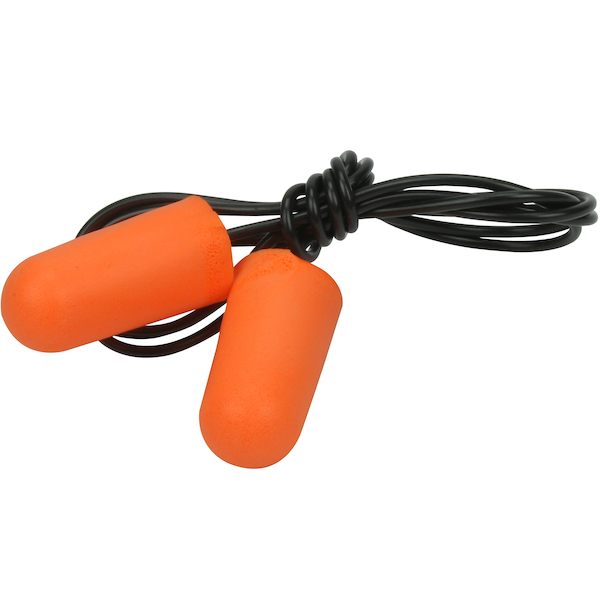
  • Howard Leight MAXIMUM Disposable Foam Earplugs: With an NRR of 33dB, these bell‑shaped plugs deliver one of the highest attenuation levels available. Ideal for extremely loud environments such as manufacturing, construction, and aviation, and perfect for workers who need a soft, comfortable all‑day seal.
  • Howard Leight Banded Earplugs: A lightweight, hygienic corded solution ideal for intermittent noise exposure. Workers can easily remove and reinsert protection without contamination, making it perfect for logistics, warehousing, and food processing.

3. Train workers to understand non‑obvious risks

Help teams understand that hearing damage doesn’t require pain or loudness. Awareness changes behavior.

4. Integrate noise control into equipment purchasing

Specify noise‑performance requirements for new tools, automation, and compressed air systems.

5. Monitor long‑term exposure trends

Quiet‑sounding noise can still add up to a significant daily dose. Track it like any other chronic hazard.

The bottom line

Hearing loss is irreversible, invisible, and often painless. That makes it one of the most insidious occupational hazards in modern industry. As a safety manager, you have the authority and responsibility to challenge outdated assumptions and protect your workforce from risks they can’t perceive.

The quietest corner of your facility may be the one doing the most damage. The time to act is now.

Click here for more information on hearing protection.

MORE ARTICLES

The Psychology Behind Effective Food Safety Culture

What’s the first thing you think of when you see a firefighter helmet? If your answer was hero, rescue, save, protect or first responder, you’d be in line with the majority of Americans. The…

READ MORE

Understanding The Differences Between Antimicrobial, Antiviral and Antibacterial Hand Protection

ANTIMICROBIAL - ANTIVIRAL - ANTIBACTERIAL: What Does This All Mean for Hand Protection? by Anthony Di Giovanni, Vice President of Global Marketing Safety managers are demanding PPE tha…

READ MORE

Reusable vs. Disposable – Using The Right Garment For The Right Job

Disposable garments or reusable garments – which choice is right for you? There has always been back-and-forth about whether reusable or disposable garments are best for the workplace. Safety ma…

READ MORE
Compare ()
Clear All Compare
Okay, Got it.