Steel, Decking, and the Edge: Why Standard Fall Protection Falls Short

BLOG ARTICLES

In many construction environments, fall protection is treated like a compliance checkbox: harness on, lanyard clipped, training complete.

But steel erection and decking work don’t operate in a standard environment.

They combine open edges, constant movement, leading-edge exposure, and shifting anchor points, all at once. The hazards are built into the work itself.

With May 4–8 as National Safety Stand‑Down and Construction Safety Week, it’s the right moment for safety leaders to step back and ask a critical question:

Is your fall protection designed for steel and decking, or just compliant on paper?

Why Steel Erection and Decking Elevate Fall Risk

Steel erection consistently ranks among the highest‑risk activities in construction. According to OSHA, falls remain the leading cause of death in construction, and steel erection accounts for a disproportionate share of those incidents. The reasons are built into the nature of the work:

  1. Open Edges Are the Workplace

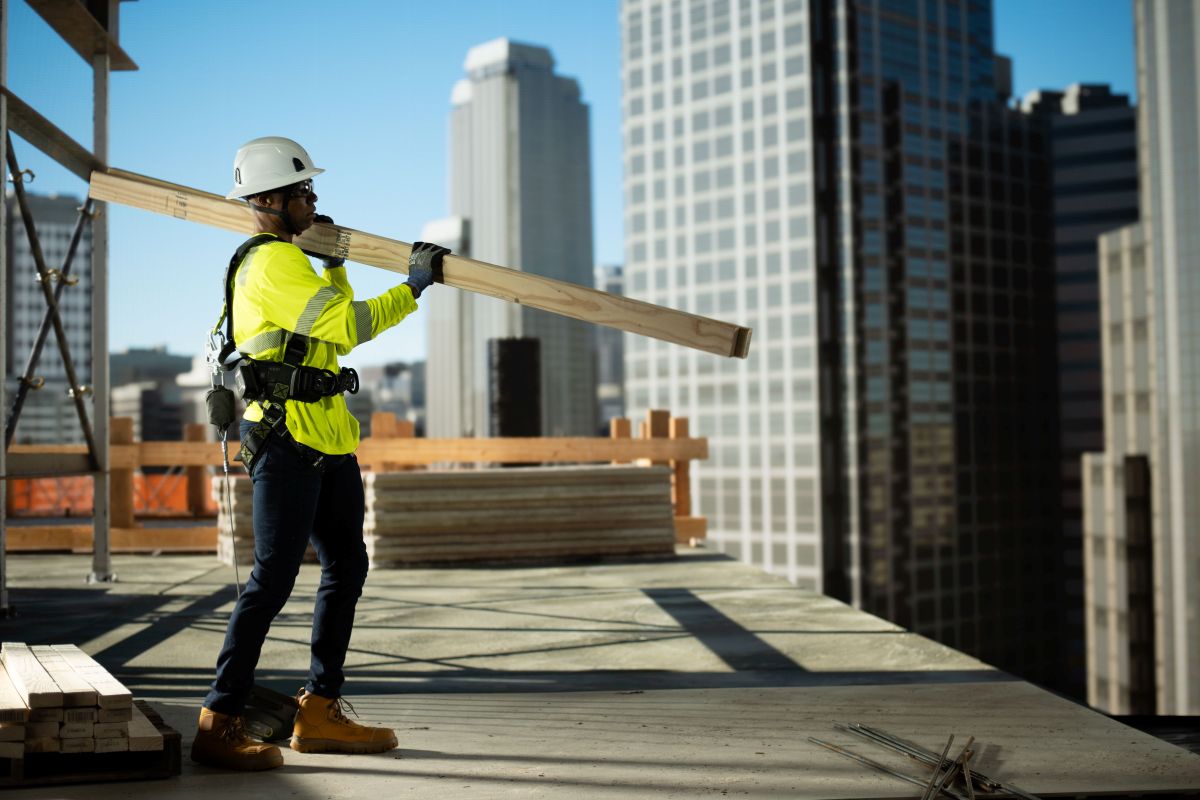
During early structural phases, crews work on bare steel with minimal perimeter protection. Guardrails are often absent, decking is incomplete, and workers operate inches from unprotected edges. This creates continuous exposure to fall hazards at heights that frequently exceed 30 feet.

  1. Constant, Multi‑Directional Movement

Ironworkers and decking crews rarely stay in one place. They traverse beams, transition between elevations, guide decking sheets, and reposition tools and materials.
Take Note: Maintaining a 100% tie‑off is essential, yet challenging, when anchor points shift as quickly as the work progresses.

  1. Material Handling at Height

Decking sheets, joists, tools, and bundled materials create:

  • Sudden load shifts
  • Reduced visibility
  • Balance disruptions
  • Trip and snag hazards

All while workers are operating at elevation on narrow, sometimes slippery surfaces.

Take Note: Steel erection and decking demand fall protection systems designed for dynamic, edge intensive, high movement environments—not generic solutions built for controlled conditions.

Where “Standard” Fall Protection Fails

Most fall protection is often designed for predictable, fixed anchor points and smooth surfaces.

Steel structures break those assumptions.

Common gaps include:

  • SRLs are not evaluated for edge conditions
  • Lack of planning for tie‑off transitions during decking and beam‑to‑beam movement
  • Lifelines susceptible to abrasion on steel beams
  • Harnesses that restrict mobility during climbing, decking, or connecting steel

  • Poorly positioned anchor locations that drive unsafe work‑around behaviors

Take Note: When equipment limits mobility or isn’t engineered for the environment, workers improvise. This is where incidents often happen.


What Effective Fall Protection Actually Looks Like

Effective fall protection for steel erection and decking is built around how the work is performed, not just where it takes place.

That means prioritizing:

  • 360° mobility and freedom of movement
  • Edge-rated SRLs and lanyards designed for leading-edge exposure
  • Anchorage connectors built for steel structures and evolving tie-off points
  • Durability against sharp edges, abrasion, and weld spatter
  • Harnesses engineered for comfort during extended, high-movement tasks

TAKE NOTE: This isn’t about adding more equipment, it’s about aligning the system to the realities of the job.


Rethinking Fall Protection: Match the System to the Work

Steel erection and decking expose a gap in how fall protection is often selected.

Too often, systems are chosen based on general compliance or standard kits—rather than the specific conditions crews face every day.

When the work involves constant movement, changing elevations, and continuous edge exposure, fall protection must be selected the same way the job is performed: dynamically.

Take Note: The more closely fall protection aligns with the way work actually happens, the more consistently it’s used, and the more effective it becomes.


Applying This on the Jobsite

So what does this look like in practice, not just in theory, but in the equipment, crews rely on every day?

One example of a system designed for these conditions is Miller fall protection, engineered for fast-moving, high-risk environments like steel erection and decking.

For these applications, an effective system typically includes:

  1. Miller® H700 Harness

Comfort directly influences compliance. The H700 harness is engineered for:

  • Extended wear
  • High mobility
  • Balanced weight distribution
  • Reduced fatigue during climbing and decking

Take Note: When workers aren’t fighting their gear, they stay tied off and safe.

  1. Miller® Falcon™ + Edge Self-Retracting Lifeline (SRL)

Leading-edge work requires SRLs tested for:

  • Edge contact
  • Foot‑level tie‑off
  • Increased fall forces
  • Abrasion resistance

Take Note: Miller Falcon + Edge devices are built specifically for these conditions, where standard SRLs may fail or be non‑compliant.

  1. Miller® Shadow® Anchor
    Steel erection rarely offers convenient anchor points. A versatile range of anchorage connectors allows crews to tie off where the work happens and:

  • Maintain 100% tie‑off
  • Move through evolving structures
  • Anchor to beams, columns, and decking safely

TAKE NOTE: These solutions support both productivity and protection.


National Safety StandDown Week: A Chance to Get JobSpecific

National Safety Stand‑Down isn’t about reminding workers to wear fall protection; it’s about ensuring the protection they wear is appropriate for the hazards they face.

Key questions for your team:

  • Are our SRLs rated for leading-edge exposure?
  • Do our systems support constant movement and elevation changes?
  • Is our equipment enabling safe behavior—or making it harder?
  • Are we relying on OSHA minimums instead of job specific solutions?

Take Note: When fall protection aligns with the work, workers are more likely to use it correctly and consistently.

Final Thought: On Steel and Decking, There Is No Margin for Error

Steel erection and decking demand more than one‑size‑fits‑all fall protection. They require systems that move with the worker, withstand edges, and protect in the most dynamic environments on the jobsite.

This Construction Safety Week, take the opportunity to evaluate your fall protection strategy. Choose equipment that reflects the real conditions your crews face. At the edge, the difference between “standard” and “engineered for the task” can be lifesaving.

Click here for more information on fall protection solutions.

MORE ARTICLES

The Psychology Behind Effective Food Safety Culture

What’s the first thing you think of when you see a firefighter helmet? If your answer was hero, rescue, save, protect or first responder, you’d be in line with the majority of Americans. The…

READ MORE

Understanding The Differences Between Antimicrobial, Antiviral and Antibacterial Hand Protection

ANTIMICROBIAL - ANTIVIRAL - ANTIBACTERIAL: What Does This All Mean for Hand Protection? by Anthony Di Giovanni, Vice President of Global Marketing Safety managers are demanding PPE tha…

READ MORE

Reusable vs. Disposable – Using The Right Garment For The Right Job

Disposable garments or reusable garments – which choice is right for you? There has always been back-and-forth about whether reusable or disposable garments are best for the workplace. Safety ma…

READ MORE
Compare ()
Clear All Compare
Okay, Got it.