Making the Cut: Where Construction Work Is Really Putting Hands at Risk

BLOG ARTICLES

Hands are the most valuable tools on any construction site, and the most frequently injured. Despite advances in PPE, severe hand injuries continue to occur at alarming rates. Lacerations, punctures, crush injuries, and abrasions remain stubbornly common, not because workers aren’t wearing gloves, but because the gloves worn often don’t match the task.

To reduce risk, safety leaders need to move beyond general glove mandates and reassess hand protection at the task level, where real-world conditions, dexterity demands, and worker behaviors intersect.

The Persistent Problem: Why Hand Injuries Haven’t Declined

Construction work is inherently dynamic. A single worker may handle sharp sheet metal, tie rebar, operate power tools, and work with adhesives or chemicals, all within the same shift. Each task introduces a different combination of cut, abrasion, impact, and grip hazards.

Yet despite this variability, hand protection is often treated as a one-size-fits-all solution. The reality is that no single glove can deliver the right balance of protection, dexterity, grip, and comfort across every task. When glove selection doesn’t reflect how work actually gets done, gaps in protection start to appear.

Those gaps show up quickly on the job:

  • Gloves that are too bulky get removed
  • Gloves without proper grip lead to slips
  • Gloves with insufficient cut resistance fail at the moment of contact

Even well-intentioned PPE programs break down when glove selection doesn’t align with:

  • Required precision and control
  • Surface conditions (dry, wet, oily)
  • Frequency and repetition of tasks
  • Exposure to cuts, abrasion, or impact
  • Worker comfort over the course of a shift

The Task-Level Reality: Protection vs. Performance

One of the biggest misconceptions in hand safety is that higher protection means better safety. However, overprotecting hands can be just as dangerous as under protecting them.

Tasks like fastening with screws or anchors, layout and measuring, setting hardware, installing conduit, pulling wire, and light material handling demand high levels of tactile sensitivity and precise control. Workers need to feel threads engage, sense torque, align fasteners, and manipulate small components—often in tight spaces or overhead.

When gloves are too bulky or poorly suited to the task, workers lose that feedback. They compensate with awkward grips, excessive hand force, slowed movements, or by removing gloves altogether to get the job done.

That’s where injuries happen. Cuts, pinches, strains, and repetitive stress injuries often occur not during high‑risk tasks, but during the everyday work repeated hundreds of times a day on the jobsite.

Effective hand protection isn’t about maximizing protection in isolation. It’s about balancing protection with performance so workers can do the job safely.

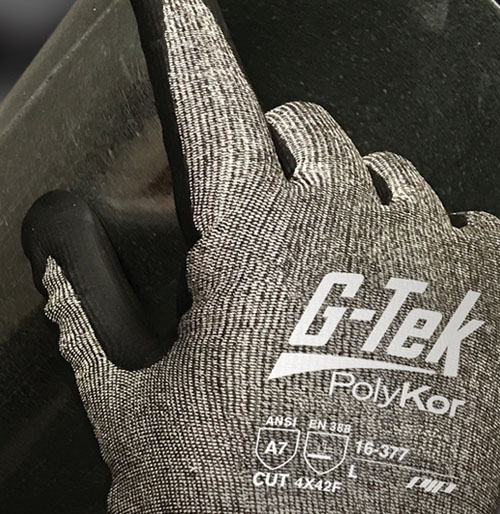
Precision Meets Protection: G-Tek® PolyKor™

When cutting, hammering, installing, or handling sharp materials all day, there’s no room for gloves that slow you down or fall apart. One bad slip can cost you time, or worse.

For construction crews, wearing 13-, 15-, and 18‑gauge gloves is the norm. They’re built to hold up to demanding jobsite conditions while still providing the grip, feel, and control needed with tools. You get the cut protection you need without the bulky, clumsy feel, so you can work fast, work clean, and get home with all your fingers intact.

The gloves we recommend are:

For general construction

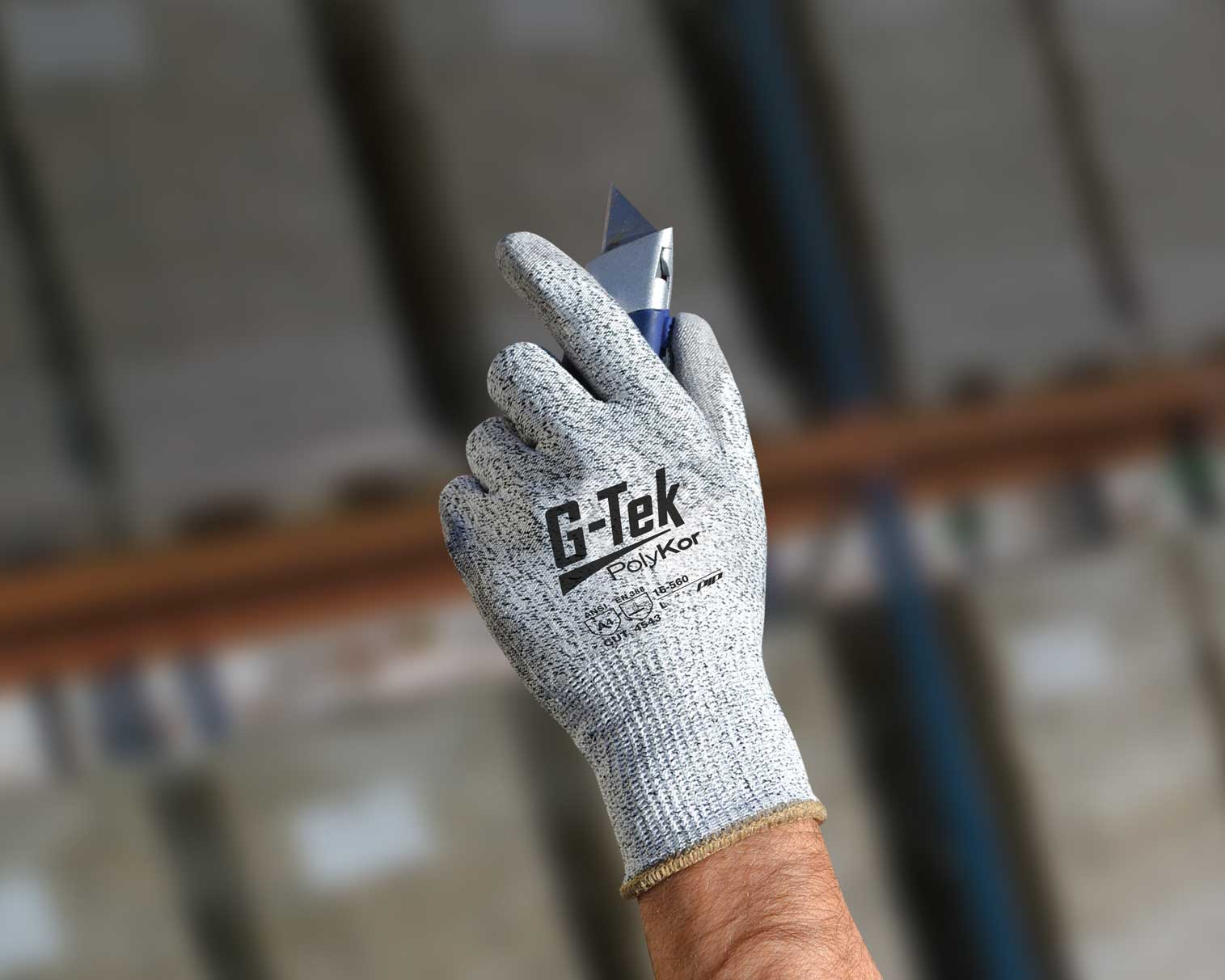
  • For dependability and durability, the G-Tek®PolyKor® (16-560) seamless knit PolyKor® blended glove with polyurethane coated flat grip on palm & fingers and a shell that provides excellent dexterity, tactile sensitivity and cut resistance.

Perfect for:

  • Material Handling
  • Site Logistics
  • Loading/Unloading
  • Site Staging


For durable, yet precise tasks

  • G-Tek®PolyKor™ (16-348) Seamless knit coreless PolyKor® blended glove with foam nitrile coated grip & micro dots on palm and fingers. No fiberglass for ultimate soft comfort and dexterity. Dotted palm for enhanced abrasion resistance.

A great choice for:

  • Framing
  • Masonry
  • Rod Busting
  • HVAC

For heavy-duty construction

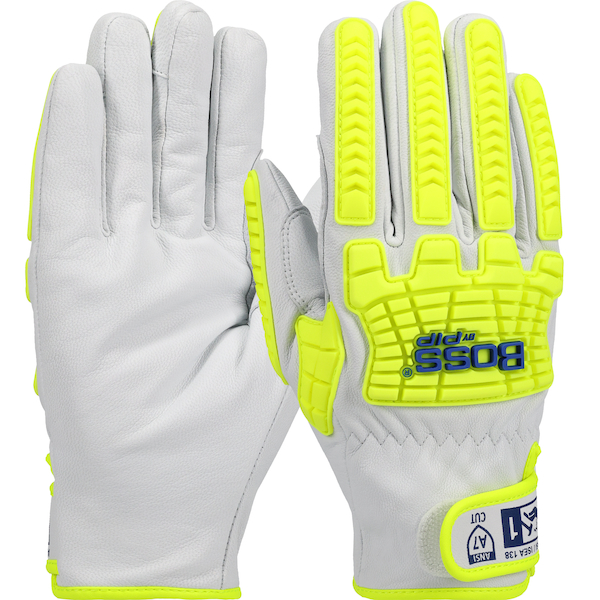
  • G-Tek® PolyKor™ (16-MPT630) Heavy duty D3O® impact protection with additional A6 cut- and level 4 abrasion-resistance. Proprietary chevron back of hand patterns combine the unique combination of ANSI/ISEA 138 level 3 impact protection with top tier hand mobility and breathability.

An excellent choice for:

  • Demolition
  • Steelwork
  • Structural Foundation Work
  • Heavy material handling

The Overlooked Risk: Repetition and Fatigue

Not all severe hand injuries are sudden. Many develop over time. Highly repetitive tasks, such as assembly, sorting, and handling small parts, can lead to fatigue, reduced grip control, and eventually, mistakes. When hands get tired, reaction times slow and grip strength drops, increasing the likelihood of slips, pinches, and minor cuts that can escalate into serious injuries.

That’s where endurance-focused gloves come into play.

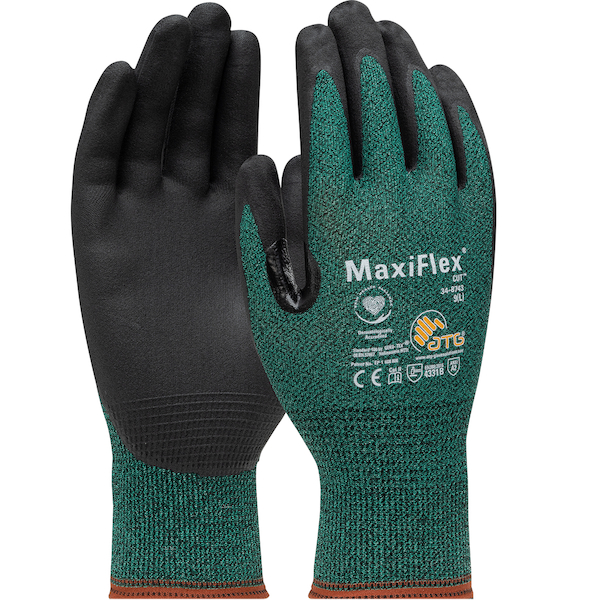
Designed for All-Day Wear: ATG®  MaxiFlex® Endurance™

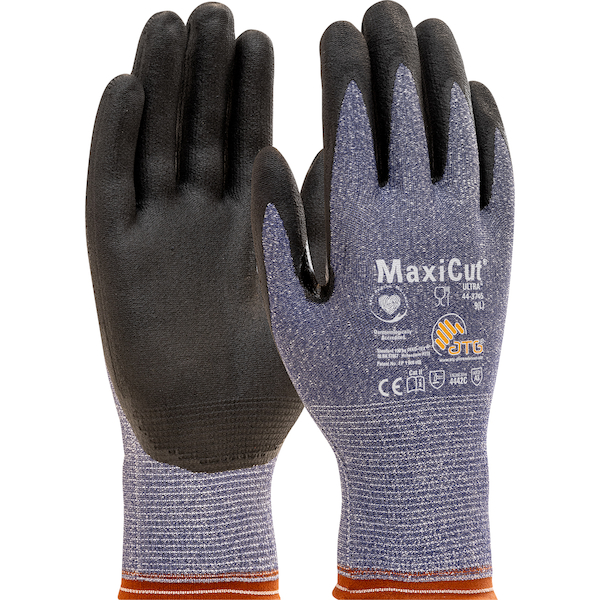
For general labor tasks that demand consistency and comfort, but not cut risks, The ATG® MaxiFlex® Endurance™ glove is an excellent choice. Engineered with nitrile-coated MicroFoam grip on palm and fingers, plus raised micro dots on palm. MaxiFlex Endurance provides:

  • Exceptional abrasion resistance
  • Enhanced cushioning for repetitive motion
  • Controlled grip in light oil environments
  • 25% thinner construction with twice the mechanical performance
  • 360° breathability and ergonomically designed fit help reduce hand fatigue levels longer into the shift
  • Smooth, rounded fingertips to improve sensitivity

When workers can maintain performance throughout the shift, the safety follows.

Rethinking Hand Protection: A Smarter Safety Strategy

Reducing hand injuries isn’t about issuing stricter rules; it’s about smarter decisions.

That starts with asking better questions:

  • What are the actual hand hazards in each task?
  • Where do workers remove gloves, and why?
  • Are comfort and dexterity being unintentionally sacrificed?
  • Do gloves change throughout the shift as tasks change?

By matching gloves like G-Tek® PolyKor® and MaxiFlex® Endurance™ to specific job functions, safety professionals can close the gap between policy and practice.

The Bottom Line

Hands are constantly at risk on construction sites, not because workers don’t care, but because environments are complex and demands change by the hour. Persistent hand injuries are a signal that it’s time to move beyond one-size-fits-all protection.

When hand protection is selected with real-world working conditions in mind, gloves stop being an obstacle and start becoming what they were always meant to be: an extension of the worker.

And that’s how you truly make the cut.

MORE ARTICLES

The Psychology Behind Effective Food Safety Culture

What’s the first thing you think of when you see a firefighter helmet? If your answer was hero, rescue, save, protect or first responder, you’d be in line with the majority of Americans. The…

READ MORE

Understanding The Differences Between Antimicrobial, Antiviral and Antibacterial Hand Protection

ANTIMICROBIAL - ANTIVIRAL - ANTIBACTERIAL: What Does This All Mean for Hand Protection? by Anthony Di Giovanni, Vice President of Global Marketing Safety managers are demanding PPE tha…

READ MORE

Reusable vs. Disposable – Using The Right Garment For The Right Job

Disposable garments or reusable garments – which choice is right for you? There has always been back-and-forth about whether reusable or disposable garments are best for the workplace. Safety ma…

READ MORE
Compare ()
Clear All Compare
Okay, Got it.