NFPA-2112

Standard on Flame-Resistant Clothing for Protection of Industrial Personnel Against Short-Duration Thermal Exposures From Fire

2023 EDITION

The standard specifies the minimum design, performance, certification, and testing requirements for flame-resistant fabric and garments for use in areas at risk from flash fires.

NATIONAL FIRE PROTECTION ASSOCIATION

The National Fire Prevention Association (NFPA) is the leading advocate for fire prevention, and the global source for public safety codes, standards, research, training, education, outreach and advocacy, to minimize the risk and effects of fire. This standard outlines the appropriate performance requirements and testing methods for both AR/FR fabric and AR/FR garments, as well as the proper labeling and quality control requirements for AR/FR manufacturers that are necessary to be considered compliant with NFPA 2112-2023.

Essential for manufacturers and certifying agencies, the NFPA 2112-2023 standard protects workers from flash fire exposure and injury by specifying the minimum performance requirements and test methods for flame resistant fabric and garments.

WHAT IS A FLASH FIRE?

A flash fire is a sudden and intense fire that is caused when a mixture of air and a flammable substance combine to ignite. It produces a very intense, extremely high heat, short duration rapidly moving flame front, that can intensify in confined spaces.

oxidizer icon

OXIDIZER

  • Oxygen
  • Nitrous Oxide

+

oxidizer icon

IGNITION SOURCE

  • Hot Surfaces
  • Sparks
  • Friction
  • Electrical Energy

+

oxidizer icon

FUEL

  • Coal
  • Wood
  • Paper
  • Leather
  • Plastic
  • Gasoline
  • Alcohol
  • Paint
  • Natural Gas
  • Propane
  • Hydrogen
  • Carbon Monoxide

THE OIL & GAS AND PETROCHEMICAL INDUSTRIES ARE AT THE HIGHEST RISK FOR FLASH FIRES

Any operation surrounded by flammable gases, volatile liquids, or particulates can be the most hazardous to workers. However, flash fire injury can drastically decrease by wearing the proper fire-resistant PPE, specifically AR/FR workwear that meets NFPA 2112-2023 standards.

UNDERSTANDING THE NFPA 2112 STANDARD

NFPA 2112-2023 specifies the minimum design, performance, certification, and testing requirements for flame-resistant fabric and garments for use in areas at risk from flash fires. Garments must meet all requirements set forth by the NFPA or use materials or components recognized by a certification organization

TESTING METHODS

There are 4 key tests that AR/FR garments and fabric must pass to be considered in compliance with NFPA 2112-2023. These tests must be performed by a certified third-party testing lab with ISO 17065 and ISO 17025 accreditation.

ASTM F1930-18
Instrument Manikin Test

ASTM F1930-18 specifies the predicted second- or third-degree human skin burn injury for a single-layer garment or protective clothing. The test is performed in simulated flash fire environment on a manikin that is exposed to a controlled heat flux, flame distribution, and duration. ASTM F1930-18 sets the passing criteria at no more than 50% total body burn in a 3 second exposure period.

ASTM D6413
Vertical Flame Test

The ASTM D6413 measures an AR/FR fabric's response to heat and flame in a controlled laboratory setting. When exposed to a flame for 12 seconds, fabrics must:

  • Self-extinguish in 2 seconds or less once removed from the flame
  • Exhibit a char length of 4 inches or less
  • Not melt or drip
  • Meet all testing criteria before and after 100 industrial laundering cycles

ASTM F2894
Heat Resistance

ASTM F2894 evaluates an AR/FR fabric's melting, dripping, ignition, separation, and shrinkage when exposed to 500°F for 5 minutes. Fabrics must not:

  • Ignite, melt, drip or separate
  • Shrink more than 10%

ASTM F2700
Heat Transfer Performance (HTP)

ASTM F2700 determines the heat transfer performance of AR/FR fabrics when exposed to both convective and radiant heat sources at 2.0 cal/cm2/sec.

Fabrics must have an HTP rating of 3.0 cal/cm2 or greater (contact) and 6.0 cal/cm2 or greater (spaced) in order to pass

GARMENT LABEL REQUIREMENTS

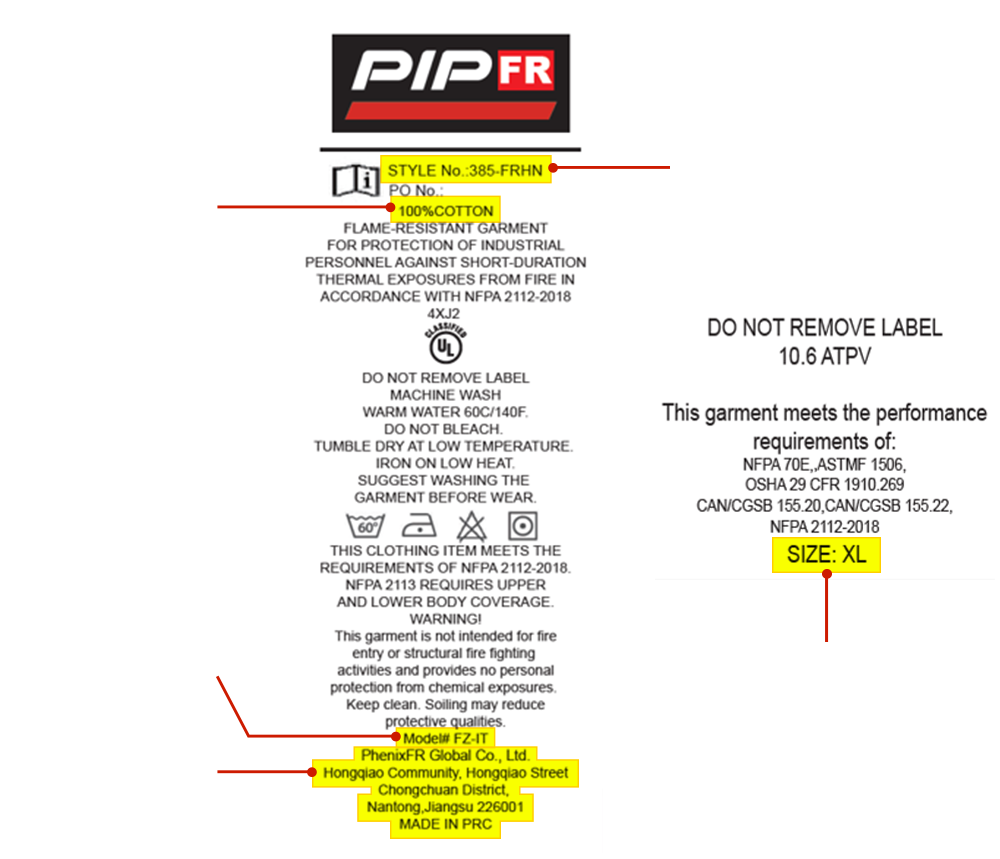
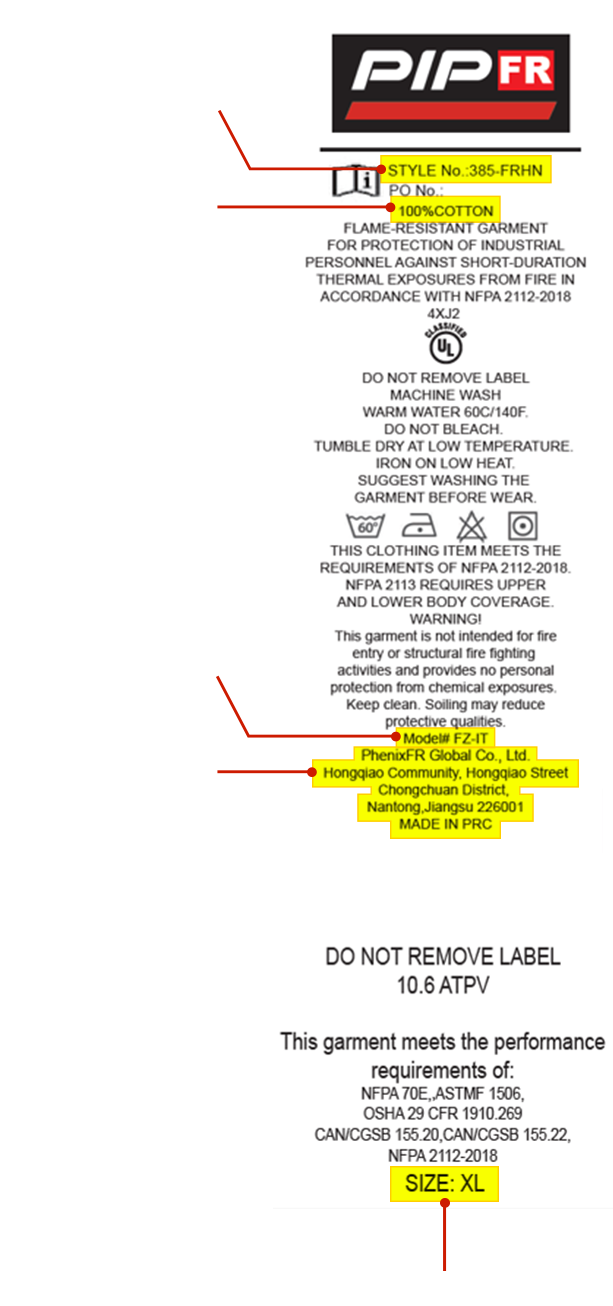
Garment tags and labels must have specific information to be considered in compliance. Garment labels must remain legible and intact after 100 industrial laundering cycles. Below you will find a PIP® AR/FR garment labeled in accordance with NFPA 2112-2023.

garment tags img guide garment tags img guide

USER INFORMATION GUIDE

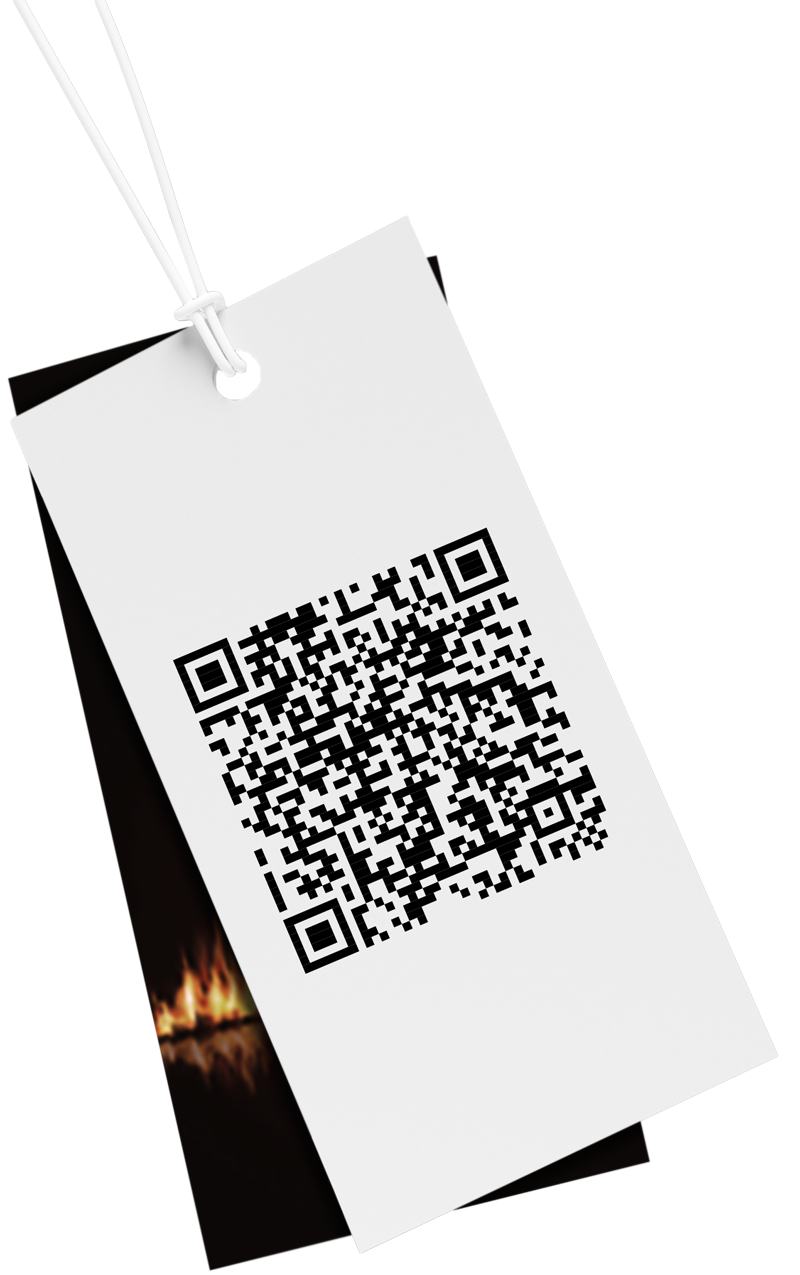
Manufacturers must provide user information on garment use, care, maintenance, and limitations. All PIP® AR/FR garments include a hang tag containing a QR code that links directly to the PIP® AR/FR User Information Guide for easy accessibility.

NFPA tag with QR code

PIP® AR/FR User Information Hang Tag

比较 ()
全部清除 比较
比较